

If you’ve ever tossed and turned through the night because of lower back pain, you know how frustrating it can be. Pain doesn’t clock out at bedtime, and poor sleep posture can sometimes make things worse.
The good news? Small changes to your sleeping position, pillow setup, and mattress choice may go a long way toward helping you get the restful sleep your body needs to recover.
In this guide, we’ll walk through what research says about the connection between sleep posture and lower back pain, explore the best sleeping positions, and share practical tips for pillows, mattresses, and nighttime habits that may support better sleep and pain relief.
Why Your Sleep Position Matters for Lower Back Pain
You spend roughly a third of your life asleep, so it makes sense that how you position your body during those hours can affect how your spine feels the next morning. Poor posture during the day, such as prolonged sitting or hunching over a desk, can compound lower back issues, making what happens during sleep even more important for recovery.
When your spine stays properly aligned throughout the night, the muscles, ligaments, and discs in your lower back have a chance to relax and recover from the day’s activities.
Research shows that sleeping supine (on your back) promotes spinal alignment and is associated with lower rates of low back pain. Side-lying, when done with supportive alignment, has also been linked to positive outcomes. In contrast, prone (stomach) sleeping was associated with an increased risk of lower back pain due to added lumbar strain.
The Best Sleeping Positions for Lower Back Pain Relief
There’s no single “perfect” sleep position that works for everyone. What matters most is maintaining your spine’s natural curves and minimizing pressure on your lower back. Here are the positions that research and clinical guidance suggest may be most helpful.
1. Side Sleeping with a Pillow Between the Knees
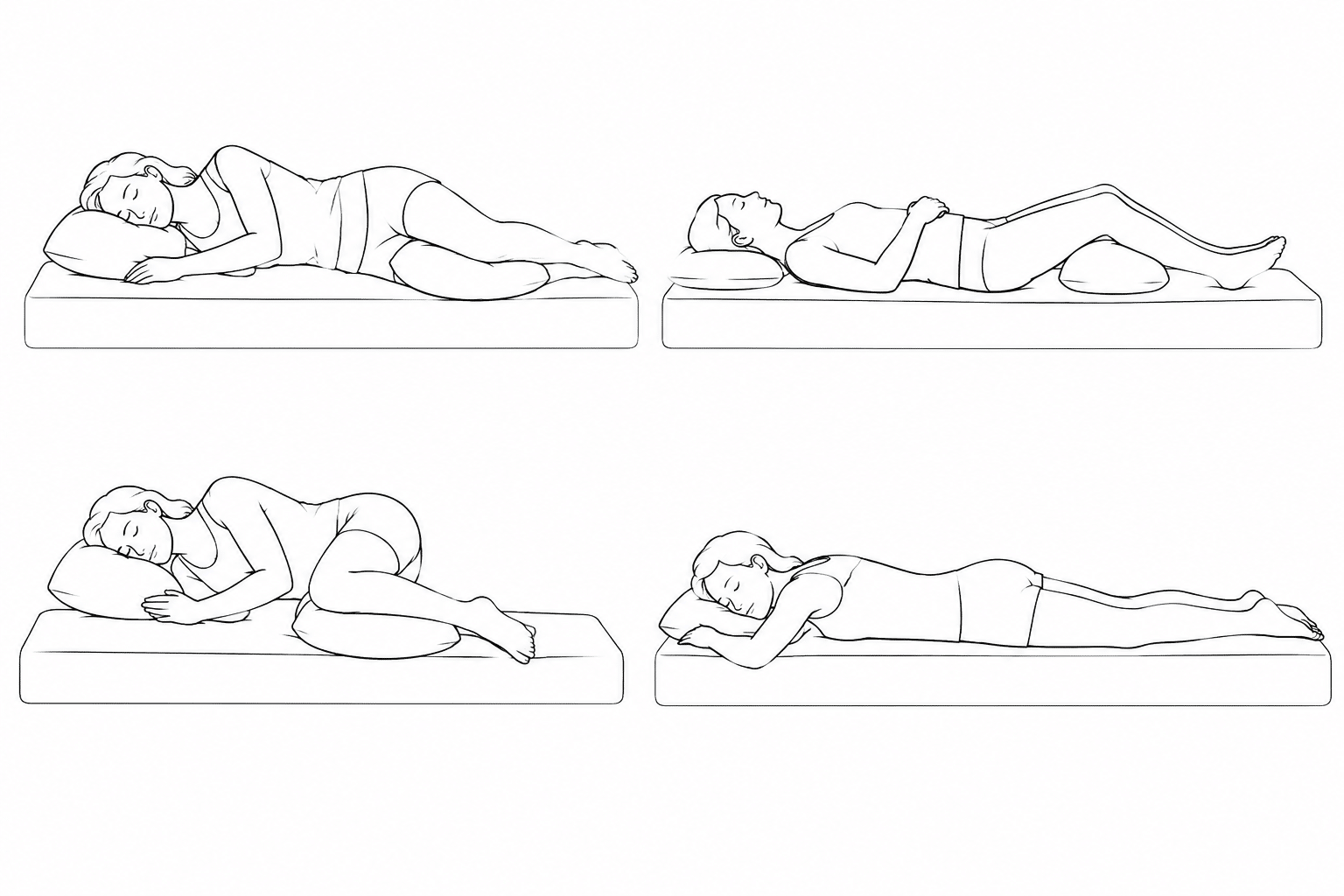
Side sleeping is the most common sleeping position, and it’s often considered one of the best options for people dealing with lower back pain, as long as it’s done with proper support. When you lie on your side, placing a firm pillow between your knees helps keep your hips, pelvis, and spine in better alignment. Without that knee support, the top leg can pull forward and rotate your lower spine, which may increase discomfort overnight.
According to the Mayo Clinic, drawing your legs up slightly toward your chest and placing a pillow between your legs can help align your spine, pelvis, and hips, taking pressure off the lower back.
Tips for side sleepers:
- Use a supportive pillow between your knees (a full-length body pillow works well, too, and this can also help if you experience knee pain).
- Keep your knees slightly bent. A gentle fetal position may help open up space between the vertebrae.
- Choose a firm pillow for your head that keeps your neck level with the rest of your spine.
- Try to alternate sides occasionally to help prevent muscle imbalance on one side of the body.
2. Back Sleeping with Knee Support
Sleeping on your back is often cited as the best sleeping position for distributing weight evenly and keeping the spine in a neutral position. However, lying completely flat can leave a gap between your lower back and the mattress, which may increase strain on the lumbar spine.
The Sleep Foundation recommends placing a pillow or rolled-up towel under your knees when sleeping on your back. This small adjustment helps maintain the spine’s natural curve and may prevent the lower back from arching excessively.
For people who find lying flat uncomfortable, a slightly reclined position — using an adjustable bed or a wedge pillow — may offer additional relief by keeping the hips and knees slightly bent while supporting the upper body.
Tips for back sleepers:
- Place a small pillow under your knees to support the natural curve of your lower spine.
- Consider a thin, rolled towel under the small of your back for extra lumbar support.
- Use a pillow that keeps your head and neck aligned with your chest and back. Avoid stacking pillows too high.
- If lying flat is uncomfortable, try a wedge pillow or reclining slightly.
Note: Back sleeping may not be ideal for everyone — for example, individuals with sleep apnea may find that side sleeping is a more comfortable alternative.
3. The Fetal Position (Modified)
Curling into a loose fetal position, on your side with your knees drawn gently toward your chest, may be particularly comfortable for people with conditions like lumbar spinal stenosis or herniated discs. This position can help open up the spaces between the vertebrae and reduce tension on the lower spine.
The key is to keep the curl gentle and relaxed. Tucking into a tight ball can round the lower back too much and may lead to stiffness by morning. As with standard side sleeping, a pillow between the knees can help maintain proper spinal alignment.
The Worst Sleeping Position for Lower Back Pain: Stomach Sleeping
Most sleep and spine experts agree that stomach sleeping tends to be the least supportive position for people with lower back pain. When you lie face-down, your torso sinks into the mattress, which can flatten the natural curve of your spine and increase pressure on the lumbar joints. Stomach sleeping also requires turning your head to one side, which may contribute to neck pain and poor sleep posture overall.
The systematic review referenced earlier found that prone sleeping is consistently associated with increased low back pain risk due to lumbar strain. The Cleveland Clinic also notes that stomach sleeping “doesn’t give those muscles a chance to rest and recover.”
If stomach sleeping is the only way you can fall asleep, there are a few modifications that may help reduce strain:
- Place a thin pillow under your pelvis and lower abdomen to help support the hips and reduce arching in the lower back.
- Use a very thin pillow under your head — or try sleeping without one — to minimize neck strain.
- Consider gradually transitioning to side sleeping by hugging a body pillow against your chest and stomach.
Choosing the Right Pillow for Lower Back Pain Relief
The right pillow can be just as important as your sleeping position when it comes to supporting proper spinal alignment and reducing discomfort. Here’s what to consider:
Head and Neck Pillow
Your pillow should keep your head and neck in a neutral position, not pushed too far forward or tilted to one side. The ideal height depends on your sleep position:
- Side sleepers generally need a firmer, thicker pillow to fill the gap between the shoulder and the head, keeping the neck aligned with the spine.
- Back sleepers tend to do well with a medium-height pillow that supports the natural curve of the neck without pushing the head forward.
- Stomach sleepers may benefit from a very thin pillow or no pillow at all to minimize neck strain.
Knee and Body Pillows
A supportive pillow between or under the knees can make a meaningful difference for lower back pain sufferers. A small pillow placed between the knees (for side sleepers) or under the knees (for back sleepers) helps maintain alignment of the hips, pelvis, and lower spine.
A full-length body pillow is another option for side sleepers who tend to roll forward during the night. It provides knee support while also helping keep the torso from twisting.
How Your Mattress Affects Lower Back Pain and Sleep Quality
Your mattress plays a significant role in spinal support and overall sleep quality. Research consistently points toward medium-firm mattresses as the most helpful option for people with lower back pain.
A landmark clinical trial published in The Lancet studied 313 adults with chronic non-specific low back pain and found that patients who slept on medium-firm mattresses had significantly better outcomes for in-bed pain, pain on rising, and disability compared with those who slept on firm mattresses.
A 2021 systematic review in the Journal of Orthopaedics and Traumatology reinforced this finding, concluding that medium-firm mattresses promote comfort, sleep quality, and spinal alignment. The review noted that while individual factors like body weight and preferred sleep position also matter, a medium-firm surface is generally a good starting point. Choosing the right mattress for your body and sleep style can be one of the most impactful changes you make.
When evaluating your mattress, consider:
- A mattress that is too soft may allow the torso to sink, throwing the spine out of alignment.
- A mattress that is too firm may create pressure points and prevent the spine from maintaining its natural curves.
- If your mattress is more than 7–10 years old and you’re waking with stiffness or discomfort, it may be time to consider a replacement.
- Your body type, weight, and preferred sleeping position can all influence which firmness level feels most supportive.
Additional Sleep Habits That May Help With Lower Back Pain
Beyond your sleeping position and bedding, a few simple nighttime habits may support better sleep and help reduce lower back discomfort:
- Gentle stretching before bed. Light stretching of the hamstrings, hip flexors, and lower back muscles may help release muscle tension before sleep. Avoid intense exercise close to bedtime.
- Maintaining a consistent sleep schedule. Going to bed and waking up at roughly the same time each day may improve overall sleep quality and help your body establish a more restorative rest cycle.
- Being mindful of how you get in and out of bed. Rolling to your side and using your arms to push up — rather than twisting or sitting straight up — can reduce strain on the lower back during transitions.
- Staying active during the day. Regular physical activity, including walking, swimming, or physical therapy exercises, may strengthen the muscles that support the spine and contribute to better sleep at night.
- Managing chronic pain proactively. If lower back pain regularly disrupts your sleep, it may be worth discussing your symptoms with a pain management specialist who can help identify the underlying cause and explore treatment options beyond over-the-counter pain relievers.
When to Talk to a Pain Management Specialist
Adjusting your sleep position, pillows, and mattress can be a great first step toward finding relief. But if lower back pain continues to interfere with your sleep quality—or if you’re experiencing chronic pain, numbness, tingling, or pain that radiates into your legs—it may be time to consult with a pain management specialist.
A comprehensive evaluation can help determine whether an underlying condition, such as a herniated disc, spinal stenosis, or degenerative disc disease, may be contributing to your discomfort. From there, a personalized treatment plan may include nonsurgical, minimally invasive treatments designed to reduce pain, restore function, and help you get back to living comfortably.
At Bux Pain Management, Dr. Anjum Bux specializes in diagnosing and treating the underlying causes of chronic back pain using advanced, evidence-based interventional pain management techniques. If lower back pain is keeping you awake at night or limiting your daily activities, schedule a consultation today to explore treatment options tailored to your needs.